

A hydraulic wireless remote control for bulldozers allows an operator to control machine functions such as blade lifting, blade tilting, steering, and travel from a position outside the cab, provided the machine’s control architecture supports these functions and the required safety measures are implemented. The right system depends on the bulldozer’s hydraulic valve configuration, travel and steering architecture, electrical interface, working environment, and required fail-safe behavior. For retrofit projects, these factors matter more than advertised radio range or the number of buttons on the transmitter.
For equipment manufacturers, fleet operators, and procurement teams, the most reliable approach is to evaluate the complete control system, including the transmitter, receiver, electrohydraulic interface, machine interlocks, emergency-stop circuit, and commissioning procedure. Nomi develops industrial wireless proportional remote controllers and customized solutions for construction machinery, including bulldozers, loaders, and other hydraulic equipment.
What Is a Hydraulic Wireless Remote Control for a Bulldozer?
A hydraulic wireless remote control is an operator interface that transmits machine commands by radio to an onboard receiver. The receiver converts those commands into electrical outputs or communications signals that operate the machine’s hydraulic or electronic control system.
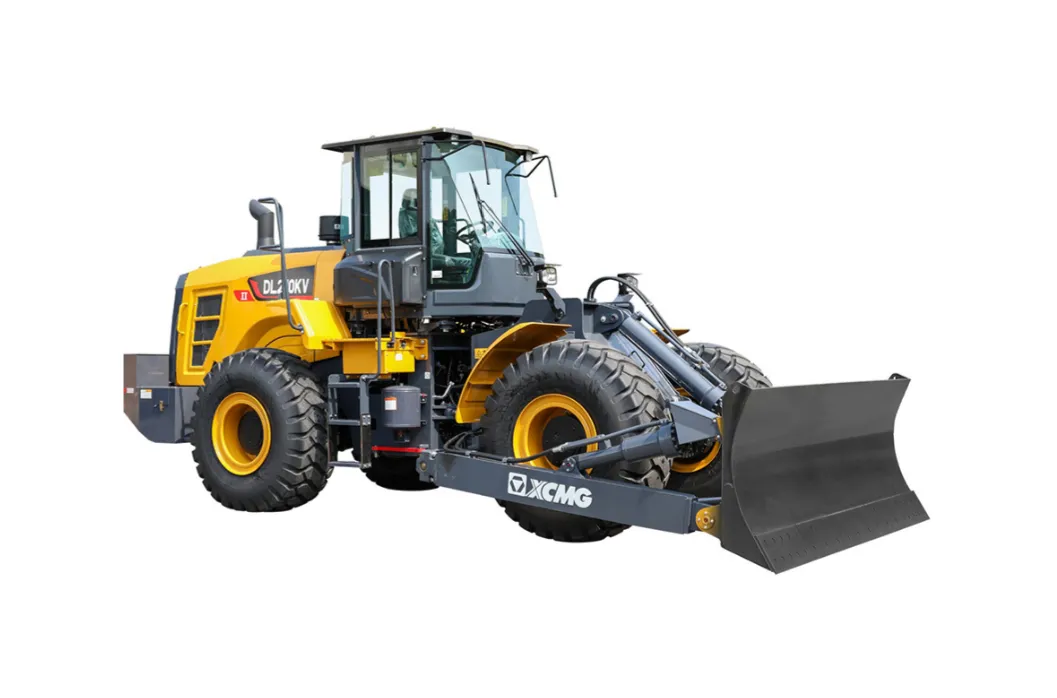
Unlike a simple wireless switch, a proportional remote control can translate joystick movement into variable control commands. This is useful when the operator must adjust blade height, blade angle, travel speed, or other functions gradually rather than switching between fully activated and deactivated states.
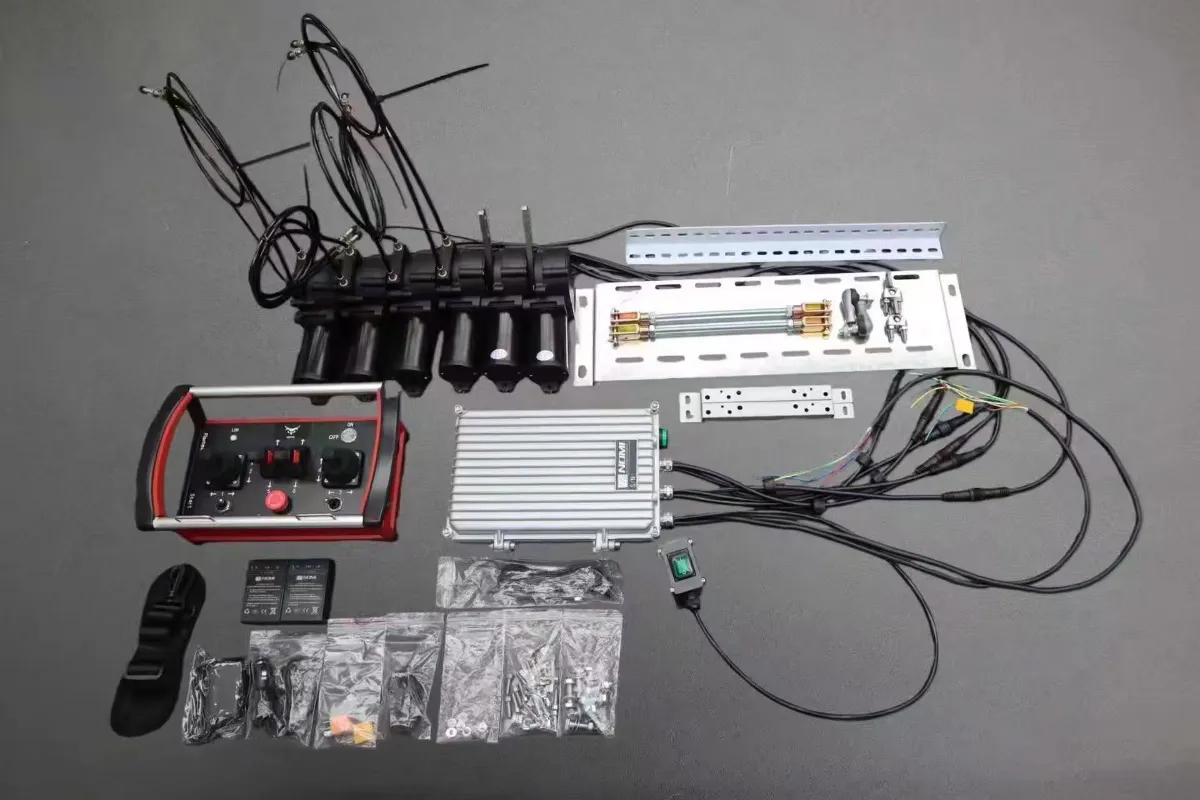
A typical system contains the following components:
-
Wireless transmitter: A handheld or shoulder-mounted unit with proportional joysticks, push buttons, an enable device, and an emergency-stop control where required by the system design.
-
Radio receiver: The onboard unit that receives, validates, and processes commands from the paired transmitter.
-
Electrical interface: Output drivers, relay interfaces, proportional amplifiers, or a suitable electronic communications interface.
-
Hydraulic control interface: The valves or actuators that regulate hydraulic flow to the machine’s functions.
-
Safety system: Defined start-up conditions, command-loss handling, emergency-stop logic, and any necessary machine interlocks.
The actual arrangement depends on the bulldozer. A machine with mechanical or hydraulic pilot controls may require a different conversion strategy from a newer model that uses electrohydraulic valves and an electronic machine controller.
The central engineering question is not simply whether the remote can transmit a command. It is whether the entire machine responds correctly when the operator moves a joystick, releases a control, presses the emergency stop, or loses the radio connection.
Which Bulldozer Functions Can a Wireless Remote Control Operate?
The available functions depend on the original machine design and the scope of the retrofit. Not every bulldozer can support every remote-controlled function without additional hardware or software integration.
| Bulldozer function | Typical remote-control requirement | Main engineering consideration |
|---|---|---|
| Blade lifting and lowering | Proportional control | Smooth movement and controlled stopping |
| Blade tilt | Proportional control | Accurate grading and positioning |
| Blade angle, if equipped | Proportional control | Compatibility with the blade’s hydraulic circuit |
| Forward and reverse travel | Proportional or machine-specific electronic control | Direction logic, braking, and unexpected movement prevention |
| Left and right steering | Proportional control or OEM-specific interface | Correct turning response and neutral behavior |
| Engine speed | Proportional or preset commands | Engine-controller compatibility and safe operating limits |
| Horn and warning functions | On/off outputs | Audible warnings must remain effective at the worksite |
| Auxiliary hydraulics | Proportional or on/off control | Attachment flow, pressure limits, and output capacity |
| Parking brake or safety interlocks | Dedicated safety-related interface where applicable | Must follow the machine’s intended safety architecture |
Blade control is usually a more straightforward starting point than complete remote operation of the bulldozer. Extending the system to travel and steering creates additional safety requirements because the machine can move, turn, or continue rolling on a slope.
Before requesting a quotation, identify exactly which functions need remote operation. A system designed only for blade movement should not be described as a complete remote driving solution.
How Does a Wireless Hydraulic Remote Control Work on a Bulldozer?
The control sequence can be represented as follows:
Operator input → Wireless transmitter → Radio communication → Onboard receiver → Machine control interface → Hydraulic valve or electronic controller → Bulldozer actuator
When the operator moves a proportional joystick, the transmitter generates a command corresponding to the direction and degree of movement. The receiver verifies and processes the message, then supplies the appropriate output to the machine control interface.
For a conventional electrohydraulic arrangement, the resulting command energizes a proportional valve or a suitable actuator. The valve regulates hydraulic flow, causing the blade or another hydraulic component to move.
On an electronically controlled bulldozer, the receiver may instead need to communicate with the machine controller. The implementation depends on the original equipment manufacturer’s design, supported interfaces, and safety restrictions.
Why proportional control matters
A basic on/off remote gives the operator limited control over how quickly a function moves. A proportional joystick provides a variable command, allowing smaller inputs for fine adjustments and larger inputs for faster movement.
This distinction matters during finish grading, slope trimming, and work close to existing structures. Excessive blade movement can disturb the prepared surface or require additional correction passes.
However, proportional input does not automatically guarantee proportional machine movement. Actual response also depends on the hydraulic valve characteristics, oil temperature, pump capacity, actuator load, controller calibration, and any control logic implemented by the machine manufacturer.
For this reason, commissioning should include tests at several joystick positions rather than only checking whether the blade moves at full command.
How Do You Check Hydraulic and Electrical Compatibility Before Buying?
Compatibility is one of the most consequential decisions in a bulldozer remote-control project. Two machines with similar operating weights can have very different control systems.
1. Identify the original control architecture
Start with the bulldozer’s manufacturer, model, serial number, year of manufacture, and available hydraulic and electrical documentation.
Determine whether the machine uses:
-
Mechanical linkages to operate the original controls.
-
Hydraulic pilot control.
-
Electrohydraulic valves with electrical proportional inputs.
-
Electronic control through a machine controller or a supported communications interface.
These arrangements require different integration methods. A retrofit that works on an older mechanically operated machine may not be suitable for a machine whose controller supervises travel, braking, or steering.
2. Verify the hydraulic valve interface
For a valve-based conversion, the engineering team needs the valve manufacturer and model, coil voltage, current requirements, connector type, and output control method.
An on/off solenoid and a proportional solenoid do not perform the same job. A proportional valve may also require an amplifier or a specific current-control strategy.
A mismatch can produce poor low-speed response, excessive valve heating, incomplete spool movement, or unstable operation.
The interface should also account for the machine’s existing pressure limits and hydraulic protection. The remote system must not bypass required pressure-relief functions or interfere with the original hydraulic circuit’s intended operation.
3. Confirm the machine power supply
Many mobile machines use nominal 12 V or 24 V electrical systems, but the actual acceptable input range and transient conditions must be confirmed.
Check receiver supply requirements, output current limits, grounding, fuse protection, reverse-polarity protection, and the electrical loads created by any additional actuators.
Do not assume that every controller advertised for 12 V or 24 V equipment can be connected directly to the existing machine harness.
4. Count the required outputs and simultaneous functions
Channel count is not the same as the total number of physical buttons or joystick axes. A proportional axis, a two-state button, a safety enable input, and an emergency-stop circuit may have different interface requirements.
Build a function map that records the operator input, commanded machine function, required output type, expected behavior at neutral, and behavior during communication loss.
This prevents a common procurement mistake: buying a transmitter with enough controls but an onboard receiver that lacks the necessary output types or safety functions.
Nomi’s hydraulic remote control product range and joystick remote controls provide starting points for discussing proportional and on/off control requirements. Final compatibility must be confirmed against the specific bulldozer and proposed configuration.
What Technical Specifications Should You Compare?
The following table is a practical starting point for evaluating industrial wireless remote controls for bulldozers. It distinguishes the specifications that must be established for the intended application from generic marketing claims.
| Specification | What the buyer should request | Why it matters |
|---|---|---|
| Control functions | Complete list of proportional and on/off functions | Establishes required channels and interfaces |
| Output type | Analog, PWM, current-controlled, relay, or supported machine communications | Determines compatibility with the original controls |
| Supply voltage | Exact receiver input range and transmitter battery specification | Prevents supply and interface mismatches |
| Radio frequency | Permitted band and exact regional configuration | Frequency availability and approval differ by market |
| Radio protocol | Pairing, command validation, interference handling, and communication-loss detection | Influences communication integrity |
| Operating range | Guaranteed or specified range under stated conditions | Helps determine practical operator positioning |
| Environmental protection | Separate transmitter and receiver ingress-protection ratings | Exposed units experience different conditions |
| Temperature range | Rated ambient limits for each relevant component | Affects batteries, displays, electronics, and enclosures |
| Proportional response | Resolution, neutral behavior, response settings, and repeatability | Affects fine blade control and predictable movement |
| Fail-safe behavior | Defined output state for signal loss, low battery, faults, and emergency stop | Prevents unsafe assumptions about machine behavior |
| Documentation | Wiring diagram, operating manual, test procedure, declarations, and applicable certificates | Supports installation, compliance, and maintenance |
| Service and spares | Replacement transmitters, batteries, receivers, and configuration support | Reduces potential lifecycle downtime |
How should Nomi specifications be interpreted?
Nomi’s published NM-010 industrial hydraulic excavator remote-control page lists the following data for that excavator-related configuration. These figures are useful as a reference for technical discussions, but they are not automatically the specifications of a completed bulldozer retrofit.
| Published item | NM-010 page listing | What to confirm for a bulldozer |
|---|---|---|
| Protection rating | IP67 | The exact rating of the supplied transmitter and receiver |
| Control distance | 225 m, customizable | Required working distance and test conditions |
| Wireless frequency | 315/433 MHz, customizable | Legal frequency and radio configuration in the destination market |
| Operating temperature | -25°C to +85°C | Component-specific limits and suitability for the intended environment |
| Supply specification | AC/DC 12 V/24 V listed | Exact receiver input requirements and electrical interface |
| Warranty | 1 year | Warranty coverage for the confirmed bulldozer configuration |
The distinction is deliberate. A product page for one machine category cannot prove that the same configuration will operate another machine safely. Obtain a written, model-specific specification before approving the order.
Which Safety Standards Apply to Bulldozer Wireless Remote Control?
Safety requirements should be established at the system level, not inferred from the transmitter’s certification label.
ISO 15817:2012 addresses essential safety requirements for remote operator control systems used on earth-moving machinery. The ISO catalogue reports that the standard was reviewed and confirmed in 2023 and remains current. It is a particularly relevant reference when evaluating a remote-control system intended for a bulldozer.
The ISO 19014 series addresses functional safety for earth-moving machinery. Its scope includes the determination of required safety performance and the design and evaluation of safety-related machine-control systems. The ISO catalogue lists the second edition of ISO 19014-1 as published in October 2026, so project teams should verify the edition and applicable parts relevant to the machine and jurisdiction.
Depending on the destination market and equipment configuration, other requirements may also apply. These can include radio-equipment regulations, electromagnetic compatibility requirements, machinery legislation, and the original machine manufacturer’s conditions for modification.
Three distinctions are essential:
-
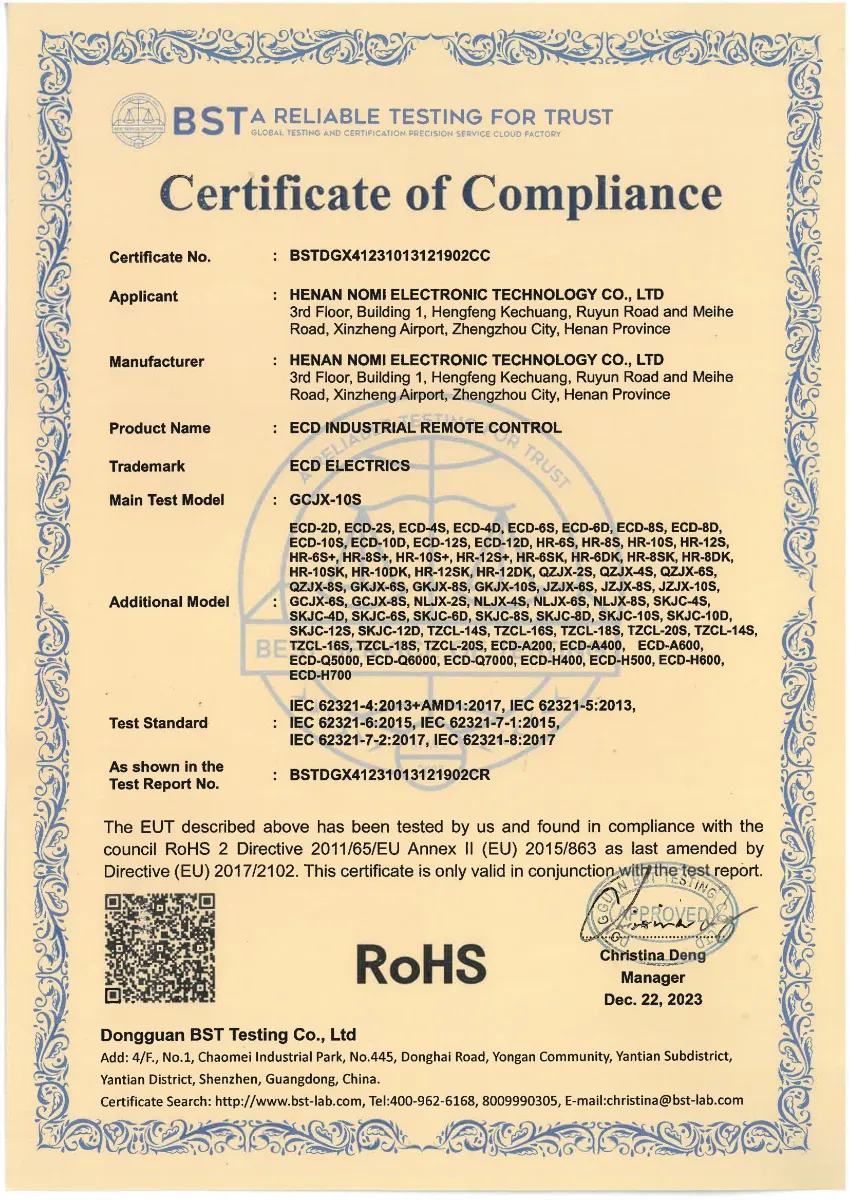
CE, FCC, and RoHS are not interchangeable. They address different regulatory or product-compliance matters and should not be treated as proof that a complete bulldozer’s remote-control safety functions have been validated.
-
A component certificate is not a complete machine assessment. The receiver, transmitter, hydraulic interface, safety logic, and machine response must be considered together.
-
Standards must be applied to the actual use case. A machine operated remotely in a controlled industrial area may have different hazards from one working near a trench, on steep ground, or in an active demolition zone.
Before procurement, ask the supplier to identify the exact certificates, the products and configurations covered, and the evidence available for the proposed safety functions. Do not rely on a general statement that a product is “compliant with international standards.”
What Happens if the Radio Signal Is Lost During Bulldozer Operation?
Signal-loss behavior is one of the most important design decisions for a remotely controlled bulldozer.
A safe response cannot be defined simply as switching every output off. The resulting machine behavior depends on its transmission, hydraulic circuits, brake design, terrain, and the function being controlled.
For example, removing an electrical command may return a valve toward neutral, but that alone does not prove that the complete machine will stop in a controlled manner. A tracked bulldozer may still move under its own momentum, and its behavior on a slope can differ substantially from its behavior on level ground.
Specify the safe state for each machine function
Before installation, engineers should document the expected response to at least the following events:
| Event | Questions that must be resolved |
|---|---|
| Radio communication loss | Do propulsion and hydraulic commands stop as intended? What happens to braking and holding functions? |
| Emergency-stop activation | Which safety-related functions are stopped, and how is the required stopping response achieved? |
| Transmitter power loss | Can the machine retain an unintended command, or does it enter the validated safe state? |
| Receiver fault or loss of supply | Are output states predictable, and can a fault cause an unexpected movement? |
| Joystick released | Does the command return to neutral reliably, and is the machine response repeatable? |
| Restart after a fault | Is deliberate operator action required before movement can resume? |
The answers must come from the actual machine design and verified integration, not from an assumption that all wireless remote systems behave identically.
Test communication loss under controlled conditions
A commissioning plan should include controlled communication-loss tests with the machine in a secured test area, using a risk-assessed procedure. Test the required functions individually and confirm that the actual response matches the approved design.
Also test transmitter start-up, receiver start-up, emergency-stop reset, low battery indications, and recovery after a temporary interruption. The remote should not restore motion unexpectedly merely because the radio connection returns.
For a new retrofit, this safety work should be completed before productivity tests or operation near personnel.
What Are the Main Failure Risks in Harsh Bulldozer Environments?
Bulldozers operate in conditions that can expose weaknesses in wiring, enclosures, batteries, mechanical mounts, and control interfaces.
Dust, mud, and water ingress
Earth-moving work generates fine dust and exposes equipment to mud, rain, and washdown. The enclosure, cable glands, connectors, switches, and battery compartment all influence practical durability.
An IP rating is useful, but it does not establish resistance to every combination of vibration, chemical exposure, water jets, temperature changes, and repeated mechanical impact. Confirm the applicable test conditions and the ratings of the complete installed assembly.
Vibration and cable damage
Continuous track movement, engine vibration, and impacts can loosen mounting hardware or fatigue conductors. Poorly routed wiring may rub against brackets, become pinched near movable components, or pull on connectors.
Receiver mounting should be secure, accessible for maintenance, and clear of excessive heat and avoidable mechanical impacts. Harness routing and strain relief deserve the same attention as the transmitter specification.
High and low temperatures
Hot environments can increase electronic component temperatures, while cold conditions can reduce battery performance and change the feel or response of mechanical controls.
The advertised temperature range should be checked against the limits of the batteries, display, enclosure materials, receiver, and any intermediate interface modules. The operating limit of a single component does not establish the permissible range of the entire system.
Electromagnetic interference
Bulldozers contain electrical loads, motors, alternators, solenoid coils, and wiring that may create interference. Nearby radios and other equipment can also affect radio performance.
Evaluate the installed system with the machine running and the relevant electrical and hydraulic functions operating. Check the antenna location, receiver wiring, grounding, and applicable electromagnetic compatibility requirements rather than assuming a clear-range radio specification guarantees reliable operation in the field.
These are engineering risks that should be addressed in the design and verification process. Their actual likelihood depends on the machine and operating conditions, so they should not be assigned a universal failure rate without supporting test data.
How Much Wireless Range Does a Bulldozer Need?
There is no single range that suits every bulldozer application.
An operator working a controlled test area may need only a modest separation from the machine. A demolition or hazardous-site application may require greater distance to maintain a safe working position. Long-distance operation can also introduce visibility and situational-awareness problems even when the radio link remains available.
The practical operating range depends on antenna placement, obstructions, interference, machine orientation, terrain, radio configuration, and the operator’s position.
A range measured in an open area should therefore be treated differently from a range demonstrated around buildings, earth banks, metal structures, or operating equipment.
For procurement, request:
-
The stated range and the conditions under which it was measured.
-
The permitted radio frequency for the destination market.
-
Evidence of reliable command reception at the required working positions.
-
A defined response when communication becomes unreliable or is lost.
Do not purchase a longer-range transmitter on the assumption that it automatically provides a safer system. The operating procedure must keep the operator in a suitable position, maintain adequate awareness of the machine, and comply with the validated communication and stopping design.
How Do You Choose Between a Basic Remote, a Proportional System, and Full Teleoperation?
The right architecture depends on the amount of machine control required.
| System type | Appropriate use | Main benefit | Main limitation |
|---|---|---|---|
| On/off wireless control | A limited number of discrete functions | Straightforward command structure | Poor fit for smooth variable-speed control |
| Proportional hydraulic remote control | Variable blade movement and other continuously controlled hydraulic functions | Fine adjustment and variable command input | Requires a compatible proportional interface and suitable calibration |
| Full machine remote-control retrofit | Remote operation of several hydraulic and travel functions | Broader control of the original machine | Greater integration and safety-validation requirements |
| Teleoperation with cameras and supporting systems | Applications where the operator must work remotely with limited direct visibility | Supports operation from a separate station | Adds video, communications, power, latency, and situational-awareness considerations |
A proportional system is often a sensible choice when the main requirement is precise hydraulic operation. A full remote-control conversion requires a broader engineering assessment, especially when it includes propulsion, steering, braking, and electronic machine functions.
For teleoperation, the system must also provide the operator with enough information to judge machine position, nearby personnel, ground conditions, and obstacles. Radio control alone does not provide that awareness.
What Is the Total Cost of Ownership of a Bulldozer Remote-Control System?
The purchase price of the remote-control kit is only one part of the project cost.
A more useful comparison includes the cost of the initial system, integration work, commissioning, training, spare parts, maintenance, and potential downtime.
Total lifecycle cost = equipment purchase + installation and integration + commissioning and training + maintenance and spares + expected downtime costs.
The equation is a budgeting framework rather than a fixed-cost model. Each term must be estimated for the intended application.
Costs that buyers commonly overlook
Machine-specific adaptation. Brackets, wiring harnesses, proportional amplifiers, solenoid interfaces, electronic-controller integration, and modifications to the original control system may be needed.
Commissioning and acceptance testing. The project may require hydraulic calibration, validation of stopping behavior, range tests, operator training, and documented functional checks.
Replacement parts. Battery availability, replacement transmitters, compatible receivers, and access to configuration information can affect maintenance costs over the service life.
Production downtime. A conversion that appears inexpensive can become costly if the machine is unavailable during installation or if integration problems delay commissioning.
Safety documentation. Risk assessment, wiring diagrams, operating procedures, maintenance instructions, and market-specific compliance documentation should be included in the project scope.
The lowest initial quotation is not always the lowest-cost option over the operating life. A supplier that provides a clear scope, documented interfaces, and a defined acceptance procedure can reduce uncertainty during implementation.
What Should Buyers Ask a Manufacturer Before Requesting a Quotation?
A useful RFQ should contain enough information for the manufacturer to assess compatibility rather than quote only a transmitter and receiver.
Provide the following details:
-
Bulldozer manufacturer, model, year, and serial number where available.
-
Existing hydraulic and electronic control architecture.
-
Functions that must be operated remotely, separated into proportional and on/off commands.
-
Valve, solenoid, and controller information, including relevant wiring diagrams.
-
Required working range and the site’s physical conditions.
-
Minimum and maximum ambient temperatures, together with expected exposure to dust, water, and vibration.
-
Required emergency-stop behavior, machine interlocks, and applicable safety standards.
-
Destination country and requested compliance documents.
-
Initial quantity, future order expectations, required delivery date, and spare-parts requirements.
Ask the supplier to identify the exact transmitter and receiver models, proposed output configuration, included accessories, excluded machine modifications, and commissioning responsibilities.
What should a purchase quotation include?
A technically useful quotation should state the system configuration, control functions, supply requirements, applicable radio specification, environmental ratings, delivery schedule, warranty, commercial terms, and documentation supplied.
If a quotation uses a generic remote-control model, ask which parts of the proposed configuration are standard and which must be customized for the bulldozer.
That distinction helps prevent disputes in which the buyer expects a complete machine-control conversion while the supplier has priced only a wireless controller.
What Is Nomi’s Capability for Bulldozer Wireless Remote-Control Projects?
According to Nomi’s company profile, Henan Nomi Electronic Technology Co., Ltd. was founded in 2015 and is based in the Zhengzhou Airport Economy Zone in Henan Province, China. The company reports a workforce of 120, including a 20-member R&D team, and annual production capacity of 20,000 sets. Its listed manufacturing and inspection equipment includes SMT, DIP, AOI, and SPI systems. The company also reports certifications including CCC, CQC, ISO, CE, FCC, and RoHS across its stated business and product scope.
Nomi’s product portfolio includes industrial hydraulic remote controls, joystick transmitters, and customized solutions for construction machinery. Its hydraulic remote control range is relevant when evaluating a potential bulldozer application, while nomiremote.com provides additional company and product information.
For a bulldozer conversion, the next step should be a machine-specific technical review rather than selecting a generic kit solely by channel count or radio range. The review should determine whether the intended configuration can interface with the original controls, what additional components are required, and how the safety functions will be validated.
For procurement purposes, Nomi’s published excavator remote-control listing states an MOQ of one set and a lead time of 2 to 15 days for that listed product. Those terms should not be assumed to apply automatically to a customized bulldozer solution. Confirm the actual configuration, engineering time, production schedule, and documentation requirements with the supplier before issuing a purchase order.
Frequently Asked Questions About Hydraulic Wireless Remote Controls for Bulldozers
1. Can a wireless remote control be installed on an existing bulldozer?
Potentially, yes. Suitability depends on the existing hydraulic valve arrangement, electrical system, travel and steering controls, machine controller, and safety requirements. A supplier should review the machine model and control documentation before confirming compatibility.
2. Can the remote control operate both the bulldozer blade and its travel system?
That depends on the system design. Blade operation may require fewer interfaces than complete travel and steering control. Remote propulsion introduces additional requirements for braking, unintended movement prevention, communication-loss response, and safe operation on slopes.
For blade positioning and other functions that require continuously variable movement, a proportional joystick generally provides better control than simple on/off commands. A push-button controller may remain suitable for discrete functions. The choice should reflect the required movement profile and the machine’s actual control interface.
4. What radio frequency should I choose for a bulldozer remote control?
The appropriate frequency depends on the transmitter and receiver configuration, the destination country’s radio regulations, and the interference conditions at the worksite. Ask the supplier to identify the exact permitted frequency and applicable approvals. Do not select a system from frequency alone.
5. Does an IP67 rating mean the remote control is suitable for every outdoor site?
No. IP67 indicates protection against dust ingress and the specified temporary-immersion test conditions under the applicable enclosure-rating standard. It does not establish resistance to every form of high-pressure washing, vibration, impact, temperature variation, or chemical exposure. Confirm the ratings of the relevant components and the suitability of the complete assembly.
6. What should happen when the remote control loses its radio connection?
The system must enter a defined and validated safe state. That state needs to address the actual response of propulsion, hydraulic actuators, braking, and any functions that could create a hazard. The machine should not resume movement automatically simply because the radio link returns.
7. What is the typical MOQ and delivery time for a bulldozer remote-control system?
MOQ and lead time depend on whether the buyer needs a standard product or a customized integration. Nomi’s published NM-010 excavator-related listing states an MOQ of one set and a lead time of 2 to 15 days. A bulldozer project may require additional engineering and validation, so obtain a written schedule for the exact configuration rather than relying on the generic listing.
8. Which documents should be requested before purchasing?
At a minimum, request the confirmed technical specification, transmitter and receiver model numbers, wiring diagram, installation and operating manuals, applicable declarations or certificates, warranty conditions, and the defined commissioning and acceptance-test procedure. For systems involving safety-related machine functions, also request documentation showing how the required safety behavior has been assessed and verified.
Final Engineering Recommendation
The best hydraulic wireless remote control for a bulldozer is the one that matches the machine’s control architecture and delivers predictable behavior throughout normal operation, fault conditions, and recovery.
For basic hydraulic applications, proportional control and a compatible valve interface may be sufficient. For complete remote operation, travel and steering integration, braking behavior, communication-loss handling, and operator visibility require a more comprehensive assessment.
Nomi recommends that buyers begin with the bulldozer model, a list of required functions, the original control-system details, the intended operating environment, and the applicable safety requirements. With those inputs, the supplier can propose a defined configuration, identify customization needs, and establish an acceptance procedure before the order is placed.
