

For most industrial wireless remote controls, the right IP rating depends on how the controller will actually be exposed to dust and water. IP65 is suitable for many outdoor industrial applications, IP66 provides stronger protection against powerful water jets, while IP67 adds protection against temporary immersion. However, IP67 is not automatically the best choice for every machine.
The IP Code is defined by IEC 60529, which classifies the degree of protection provided by electrical equipment enclosures. The first digit concerns protection against solid foreign objects and dust, while the second digit concerns protection against water.
For an industrial hydraulic remote control, the important question is therefore not simply “Which IP rating is highest?” It is:
What type of dust, water and environmental exposure will the remote control experience during normal operation, cleaning and accidental events?
That distinction can prevent buyers from either specifying insufficient protection or paying for a protection level that does not solve their actual environmental problem.
What Does the IP Rating Mean?
IP stands for Ingress Protection.
The rating is normally written as two digits, for example:
IP65
The first digit describes protection against solid particles. The second digit describes protection against water.
For the three ratings discussed in this article, the first digit is always 6.
That matters because IP6x indicates a dust-tight enclosure classification. The difference between IP65, IP66 and IP67 is therefore primarily the second digit, which changes the type of water exposure covered by the rating.
| Rating | First digit | Second digit | Main water protection concept |
|---|---|---|---|
| IP65 | 6 | 5 | Protection against water jets |
| IP66 | 6 | 6 | Protection against powerful water jets |
| IP67 | 6 | 7 | Protection against temporary immersion |
These ratings should be understood as different protection classifications rather than a simple quality scale.
IEC 60529 is the relevant international standard for the IP Code. The IEC’s consolidated publication incorporates the original standard and subsequent amendments.
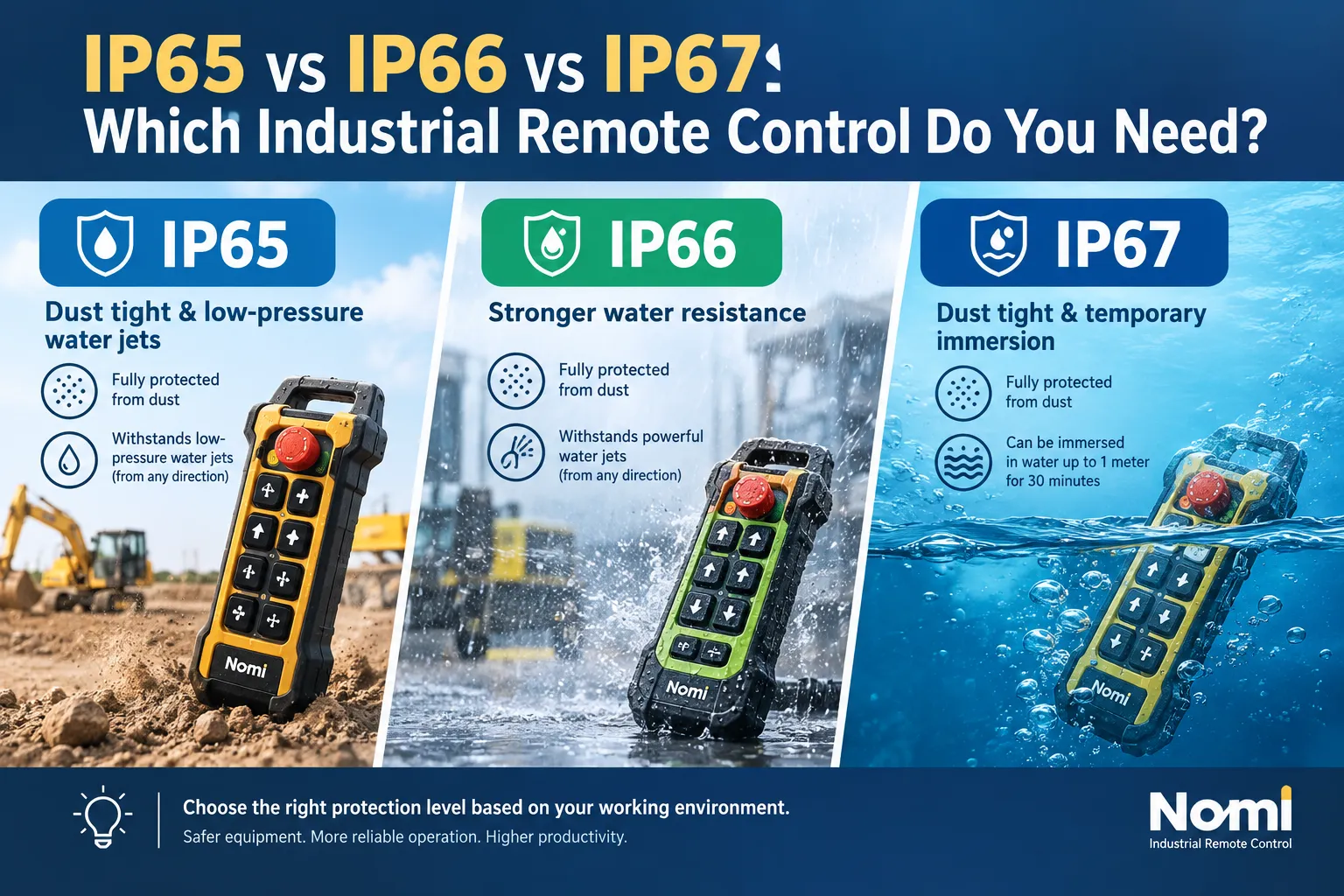
IP65 vs. IP66 vs. IP67 at a Glance
For a buyer comparing industrial wireless remote controls, the practical difference can be summarized as follows:
| Feature | IP65 | IP66 | IP67 |
|---|---|---|---|
| Dust protection | Dust-tight classification | Dust-tight classification | Dust-tight classification |
| Water exposure | Water jets | More powerful water jets | Temporary immersion |
| Typical concern | Rain, splashing, routine outdoor exposure | Heavy spray and stronger wash-down conditions | Accidental drops or temporary immersion |
| Suitable for outdoor machinery | Often | Often | Yes, depending on application |
| Suitable for wet environments | Often | Better margin | Better when immersion is possible |
| Does it mean continuous underwater use? | No | No | No |
| Is it automatically better for every application? | No | No | No |
One important point is often misunderstood: IP67 should not be treated as a universal replacement for IP66.
The tests represent different water-exposure conditions. A product having an IP67 rating should not automatically be interpreted as having been tested for every higher water-jet condition associated with IP66 unless the manufacturer explicitly states both ratings.
This distinction matters when an industrial remote control will be exposed to pressure washing or aggressive cleaning rather than accidental immersion.
What Does IP65 Mean for an Industrial Remote Control?
An IP65 industrial remote control has a dust-tight enclosure classification and protection against water jets under the applicable test conditions of IEC 60529.
This can be relevant for outdoor machinery where the controller may encounter:
- Rain
- Water splashing
- Dust
- Dirt
- Construction-site debris
- Normal outdoor weather
- Routine wet operating conditions
For example, an operator controlling a hydraulic machine outdoors may spend the day working around dust and intermittent rain. In that situation, IP65 can be a practical specification.
However, buyers should avoid interpreting IP65 as meaning “waterproof under all conditions.”
The IP rating is based on defined test conditions. Real equipment may experience water exposure that is different from the standardized test.
For example, a controller may encounter:
- A high-pressure cleaning nozzle
- Water entering through a connector
- A damaged enclosure seal
- A loose battery cover
- Repeated mechanical impacts
- Water accumulating around a switch or control interface
Those factors cannot be evaluated simply by looking at the two digits.
When IP65 can be a reasonable choice
IP65 may be appropriate when the remote control is primarily exposed to:
- Outdoor rain
- General dust
- Water splashes
- Normal construction-site conditions
- Routine industrial use without immersion risk
It can also make sense when the equipment design, installation and maintenance procedures already control the major environmental risks.
The key is to evaluate the complete application rather than selecting IP65 because it is the lowest-cost rating among three options.
What Does IP66 Mean?
IP66 maintains the same first digit, 6, for dust protection but increases the water protection classification to 6.
The practical difference is that IP66 addresses more powerful water jets than IP65 under the IEC 60529 test conditions.
That can make IP66 particularly relevant to equipment exposed to more aggressive cleaning or heavy water spray.
Industrial equipment may need this additional protection when operators regularly clean machinery or when the controller is located close to equipment that produces substantial water spray.
For example, a remote control used around heavy machinery may be exposed to:
- Strong rain
- Machinery wash-down
- Water spray
- Wet construction environments
- Cleaning operations
- High-pressure water exposure
In these situations, IP66 may provide a more appropriate specification than IP65.
IP66 is not simply “more waterproof”
The difference between IP65 and IP66 should be understood in terms of the test exposure, not as a general percentage increase in waterproofing.
A buyer should therefore avoid statements such as:
“IP66 is 20% more waterproof than IP65.”
There is no meaningful basis for such a calculation.
The correct approach is to identify the expected water exposure and then verify which protection classification addresses it.
What Does IP67 Mean?
IP67 has the same dust-tight first digit, but the second digit, 7, concerns temporary immersion in water under the relevant IEC 60529 test conditions.
This makes IP67 particularly interesting for portable industrial equipment.
A wireless remote control is handled by an operator. Unlike a permanently mounted control enclosure, it can potentially be:
- Dropped
- Placed on wet ground
- Exposed to heavy rain
- Knocked into standing water
- Temporarily submerged during an accident
That is where IP67 can provide useful additional protection.
However, there is an important limitation:
IP67 does not mean that the remote control is designed for continuous underwater operation.
A temporary immersion classification should not be converted into a claim of permanent underwater functionality.
If a machine requires continuous underwater operation, the buyer needs to discuss the specific application with the manufacturer and determine whether another protection concept, enclosure design or testing requirement is necessary.
IP65 vs. IP66 vs. IP67: Which One Should You Choose?
The easiest way to choose the right rating is to start with the operating environment.
| Application condition | Starting point to consider |
|---|---|
| Outdoor use with dust and rain | IP65 |
| Regular heavy water spray | IP66 |
| Stronger wash-down exposure | IP66, subject to the actual cleaning method |
| Possibility of accidental temporary immersion | IP67 |
| Outdoor hydraulic machinery | IP65 or IP66, depending on water exposure |
| Remote control frequently placed on wet ground | IP67 may be preferable |
| Continuous underwater operation | Do not select based on IP67 alone |
| Unknown environmental exposure | Discuss the actual conditions with the supplier |
This table is a starting point, not a universal product-selection rule.
The correct specification depends on the actual machine, enclosure design, connectors, operating procedure and environmental exposure.
Why IP67 Is Not Always Better Than IP66
This is one of the most important points for industrial buyers.
It is tempting to assume:
IP65 < IP66 < IP67
and therefore:
IP67 = best choice.
That interpretation is too simplistic.
The second IP digit represents different water-protection test conditions. IP66 addresses powerful water jets, while IP67 addresses temporary immersion.
Therefore, if your main environmental threat is high-pressure water cleaning, an IP66 rating may be more directly relevant than simply choosing IP67.
If your main concern is accidental temporary immersion, IP67 may be more appropriate.
The correct choice is determined by the exposure scenario.
A useful purchasing principle is:
Choose the IP rating according to the most relevant environmental hazard, not according to the highest number on the specification sheet.
What IP Rating Does an Industrial Hydraulic Remote Control Need?
Industrial hydraulic machinery can operate in environments that are considerably harsher than an office or factory control panel.
A hydraulic remote control may be used around:
- Excavators
- Cranes
- Concrete pump trucks
- Dump trucks
- Winches
- Construction machinery
- Agricultural equipment
- Material-handling equipment
- Industrial hydraulic systems
For applications involving variable hydraulic control, buyers can also compare the requirements of a proportional hydraulic remote control with simpler on/off control systems.
The environmental requirement should be considered separately from the control architecture.
For example:
Proportional vs. on/off answers a control-function question.
IP65 vs. IP66 vs. IP67 answers an enclosure-protection question.
A proportional remote control is not automatically more water-resistant because it uses proportional control, and an IP67 controller is not automatically better at controlling a hydraulic valve because it has a higher IP number.
These are different specifications.
IP Rating Is Only One Part of Remote-Control Durability
An IP rating is important, but it should not be treated as a complete durability specification.
For an industrial wireless remote control, buyers may also need to consider:
Mechanical impact
The remote may be dropped or struck against machinery.
An IP rating does not by itself describe mechanical impact resistance.
Vibration
Construction machinery, cranes and hydraulic equipment can generate continuous vibration.
The suitability of a remote control for these environments should therefore be evaluated using the manufacturer’s applicable vibration and mechanical testing information.
Temperature
Outdoor machinery can experience substantial temperature changes.
The buyer should verify the actual operating-temperature specification for the specific model rather than assuming that IP65, IP66 or IP67 determines temperature capability.
Chemical exposure
Hydraulic oil, lubricants, cleaning agents, fuels and other industrial chemicals may contact the enclosure.
An IP rating does not establish chemical compatibility.
If chemical exposure is expected, ask the supplier about enclosure materials, seals and compatibility testing.
Connectors and cable glands
The main enclosure may have a high IP rating while a poorly specified connector or cable entry creates a weaker point.
This is especially important for systems consisting of:
- Transmitter
- Receiver
- External antenna
- Charging interface
- Cable
- Connector
- Battery compartment
The protection of the complete installed system should therefore be considered.
The Difference Between an IP Rating and a Product Certification
Another common purchasing mistake is confusing an IP rating with certification.
An IP rating is a classification under the IEC 60529 framework. It describes the degree of protection provided by an enclosure under the relevant test conditions.
It does not automatically mean that a product has:
- CE certification
- FCC authorization
- SIL certification
- Functional safety certification
- EMC certification
- ATEX certification
- Mechanical impact certification
Those are separate requirements.
For example, an industrial remote control may have an IP65 enclosure rating and separately have applicable radio, EMC or machinery-related compliance documentation.
When purchasing a wireless industrial controller, buyers should therefore treat IP rating and regulatory compliance as separate specification categories.
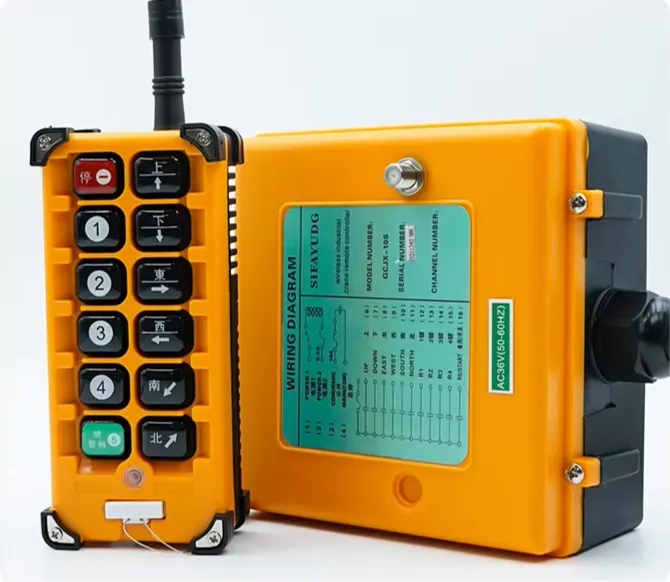
What Should Buyers Ask a Remote-Control Supplier?
If IP protection is important to the application, do not stop at the phrase “IP67.”
Ask the supplier for specific information.
1. What is the IP rating of the exact model?
Do not assume that every model in a product family has the same rating.
The rating should be associated with the actual transmitter or receiver model being quoted.
2. Which standard was used?
For an IP Code claim, ask whether the rating is based on IEC 60529 and request the applicable test documentation where appropriate.
3. Does the rating apply to the complete product?
Clarify whether the rating applies to:
- Transmitter
- Receiver
- Battery compartment
- Charging port
- Connectors
- Cable glands
- Antenna connections
4. Was the product tested as assembled?
The configuration tested can matter.
A removable battery, connector, protective cap or external accessory can change the actual installed configuration.
5. What is the operating temperature?
IP protection does not tell you the operating temperature.
For outdoor machinery, temperature can be just as important as water exposure.
6. Is the product suitable for high-pressure cleaning?
This is particularly important if the machine will be washed regularly.
Do not assume that IP67 automatically means the product is suitable for every pressure-washing procedure.
7. What happens if the remote is dropped?
Ask separately about mechanical impact resistance and enclosure durability.
8. What maintenance is required?
Seals, covers, connectors and protective caps may require inspection or replacement depending on product design and use.
Common Mistakes When Comparing IP65, IP66 and IP67
Mistake 1: Choosing IP67 simply because the number is higher
A higher number is not automatically the correct answer.
First identify the actual water exposure.
Mistake 2: Assuming IP67 means continuous underwater operation
IP67 concerns temporary immersion under the applicable test conditions. It should not be interpreted as permanent underwater operation.
Mistake 3: Assuming the whole system has the same protection rating
A transmitter can have one rating while another component, connector or accessory has a different rating.
Always check the complete system.
Mistake 4: Treating IP rating as a durability rating
IP protection does not replace specifications for impact, vibration, temperature, chemicals or radio performance.
Mistake 5: Buying based only on the product catalogue
For an industrial remote control, application information is often more useful than a single specification number.
The supplier should understand:
- Machine type
- Hydraulic control architecture
- Number of functions
- Proportional or on/off control
- Outdoor or indoor operation
- Expected water exposure
- Cleaning method
- Operating temperature
- Required wireless range
- Required safety functions
For example, Nomi’s industrial hydraulic remote-control systems are designed for applications where wireless control interfaces with existing hydraulic machinery, including proportional and on/off hydraulic control architectures. Nomi’s industrial hydraulic remote control systems provide a useful starting point when discussing application requirements.
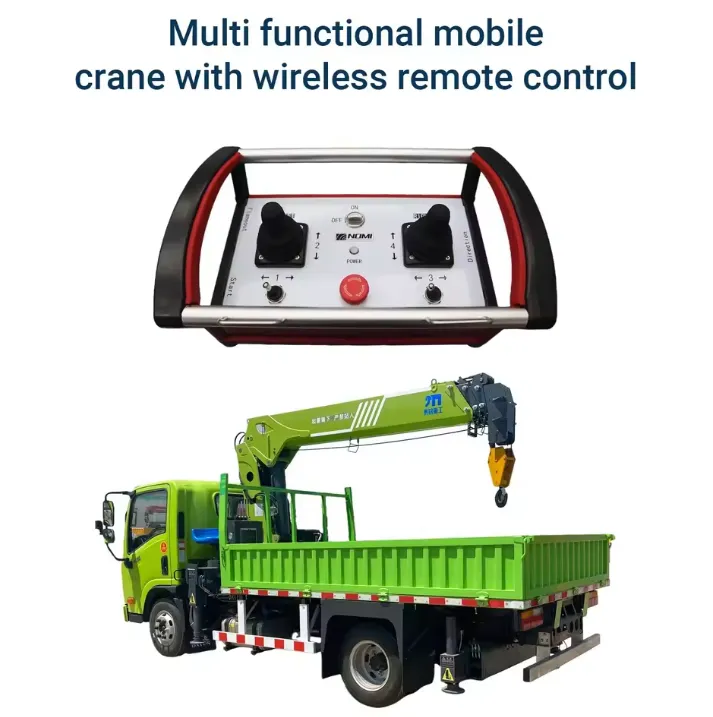
How IP Rating Fits Into the Selection of a Wireless Hydraulic Remote Control
IP protection should be evaluated together with the control requirements.
A simplified selection process looks like this:
Step 1: Identify the machine
Is it an excavator, crane, concrete pump truck, dump trailer, winch or another hydraulic machine?
Step 2: Identify the control method
Does the machine require:
- On/off control?
- Proportional control?
- Joystick control?
- Push-button control?
- A combination?
For applications requiring continuous operator input, an industrial joystick remote control may be more appropriate than a simple push-button interface.
For simpler discrete functions, a push button remote control may be sufficient.
Step 3: Identify environmental exposure
Determine:
- Dust
- Rain
- Water spray
- Wash-down
- Standing water
- Possible immersion
- Temperature
- Chemicals
- Vibration
- Mechanical impact
Step 4: Select the appropriate IP requirement
Only after understanding the environment should IP65, IP66 or IP67 be compared.
Step 5: Verify the complete system
Check the transmitter, receiver, connectors, battery compartment and other exposed components.
Step 6: Verify applicable documentation
If the remote control is being integrated into industrial machinery, confirm the documentation and compliance requirements relevant to the destination market and application.
IP65, IP66 or IP67: A Practical Decision Rule
For most buyers, the following logic is more useful than simply memorizing the definitions:
Choose IP65 when:
The remote control will be used outdoors and needs protection against dust, rain and water jets under the applicable test conditions, but temporary immersion is not an expected hazard.
Consider IP66 when:
The equipment is likely to experience stronger water jets, more aggressive wash-down or substantial water spray.
Consider IP67 when:
Accidental temporary immersion is a realistic possibility, such as a portable remote being dropped into standing water.
Do not choose IP67 alone when:
The application requires continuous underwater operation, specific chemical resistance, high-pressure washing performance, or other environmental characteristics that IP67 does not define.
This approach gives the IP rating a practical meaning instead of treating it as a marketing number.
FAQ
Is IP67 better than IP65?
Not in every practical sense. IP67 provides a different water-protection classification, including temporary immersion. IP65 is based on water-jet protection. The better choice depends on the actual exposure.
Is IP66 better than IP65?
IP66 provides a higher water-jet protection classification than IP65 under IEC 60529. It may therefore be more appropriate where stronger water jets or wash-down exposure are expected.
Is IP67 waterproof?
The word “waterproof” can be misleading. IP67 indicates protection against temporary immersion under the applicable test conditions. It does not establish that a product can operate continuously underwater.
Is IP65 enough for an outdoor hydraulic remote control?
It can be, depending on the application. If the remote will mainly experience dust, rain and ordinary water exposure, IP65 may be an appropriate starting specification. The actual machine environment should still be reviewed.
Should a construction crane remote control be IP65, IP66 or IP67?
There is no universal rating for every crane. The correct choice depends on rain, cleaning procedures, water spray, accidental immersion risk and the design of the complete control system.
For crane applications, buyers can also review dedicated construction crane remote controls and discuss the environmental requirements with the supplier.
Does IP67 protect against high-pressure water?
Do not assume so. IP67 represents temporary immersion protection. If high-pressure water cleaning is a major exposure, verify the applicable water-jet protection rating separately.
Does IP rating tell me whether a remote control is impact resistant?
No. IP protection and mechanical impact resistance are separate characteristics. Ask the manufacturer for the applicable impact or mechanical durability specification.
Does IP rating protect against hydraulic oil?
Not automatically. IP ratings concern ingress protection against defined solid and water exposures. Chemical compatibility with hydraulic oil, cleaning chemicals or other fluids needs separate consideration.
Should the transmitter and receiver have the same IP rating?
Not necessarily. They may have different environmental positions and therefore different design requirements. However, buyers should understand the rating of each exposed component rather than assuming that the entire system inherits the highest rating.
What should I ask before buying an IP-rated industrial remote control?
At minimum, ask for the exact model’s IP rating, applicable test standard, scope of the rating, connector and battery-compartment protection, operating-temperature range, and suitability for the actual cleaning and environmental conditions of the machine.
Final Takeaway
The difference between IP65, IP66 and IP67 is more specific than simply “good, better, best.”
All three use the 6 first digit for dust-tight protection. The important difference is the water-protection classification:
- IP65: water jets
- IP66: more powerful water jets
- IP67: temporary immersion
For an industrial wireless remote control, the correct rating should be selected from the actual operating environment.
If the controller will mainly encounter outdoor dust and rain, IP65 may be sufficient. If strong water jets or wash-down are expected, IP66 may be more relevant. If accidental temporary immersion is a realistic risk, IP67 may be worth specifying.
The final specification should also consider connectors, battery access, temperature, vibration, impact, chemical exposure and the requirements of the complete wireless control system.
For buyers evaluating an industrial hydraulic remote control, the most useful question is therefore not “What is the highest IP rating you offer?” but:
“What environmental conditions will this remote control actually face, and what evidence shows that the complete system is suitable for them?”
