

When an industrial wireless remote control loses signal, a properly designed system should detect the loss of valid communication and trigger its predefined response. Depending on the receiver configuration and the machine’s safety control system, this may involve disabling movement commands, deactivating specified outputs, or initiating a machine stop. There is no universal timeout or identical stop behavior for every wireless remote control. The correct response must be confirmed for the exact transmitter, receiver, and machine combination.
For hydraulic equipment, losing the radio link does not necessarily mean that every movement stops instantly, hydraulic pressure disappears, or a suspended load becomes safe. The operator must understand what the system is designed to do, keep people clear of hazardous areas, and follow the machine’s emergency procedures.
What Happens Inside the Control System When the Signal Is Lost?
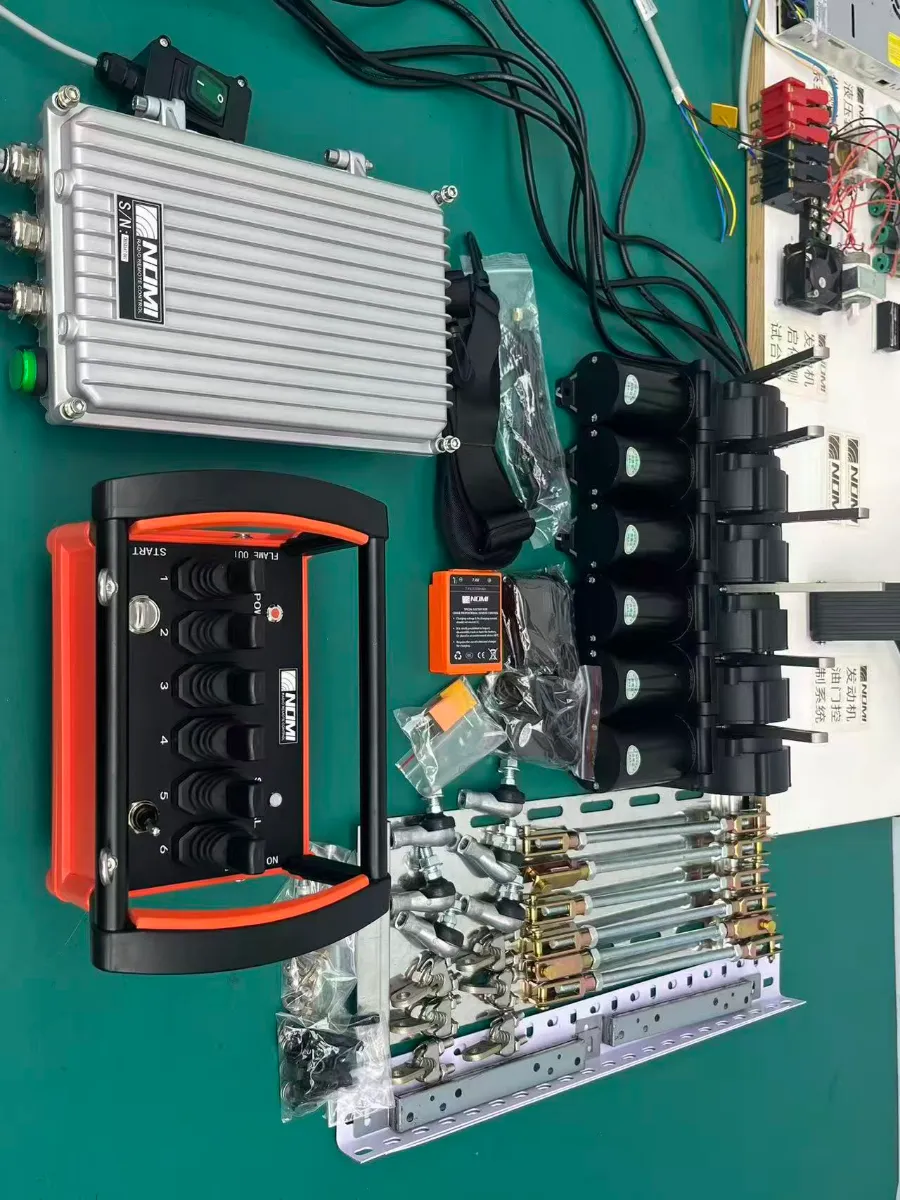
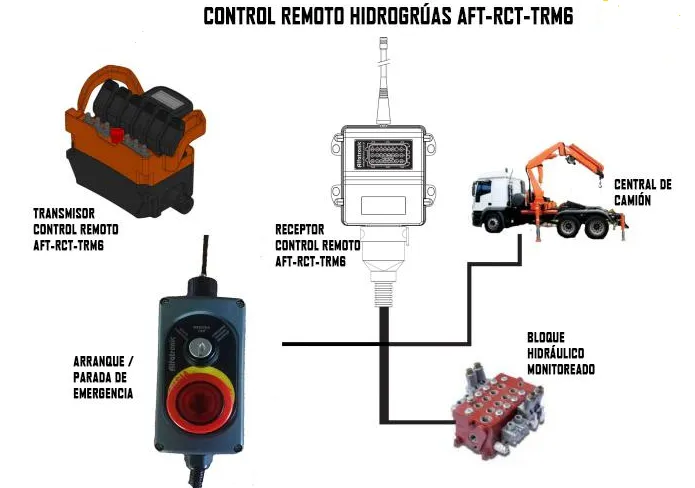
An industrial radio remote control consists of more than a handheld transmitter. The transmitter sends commands, the receiver validates and processes them, and the machine’s electrical or hydraulic control system converts those commands into movement.
Typical control path: operator → transmitter → radio link → receiver → machine control circuit → hydraulic valve or other actuator.
When communication becomes unavailable, the response generally involves several stages.
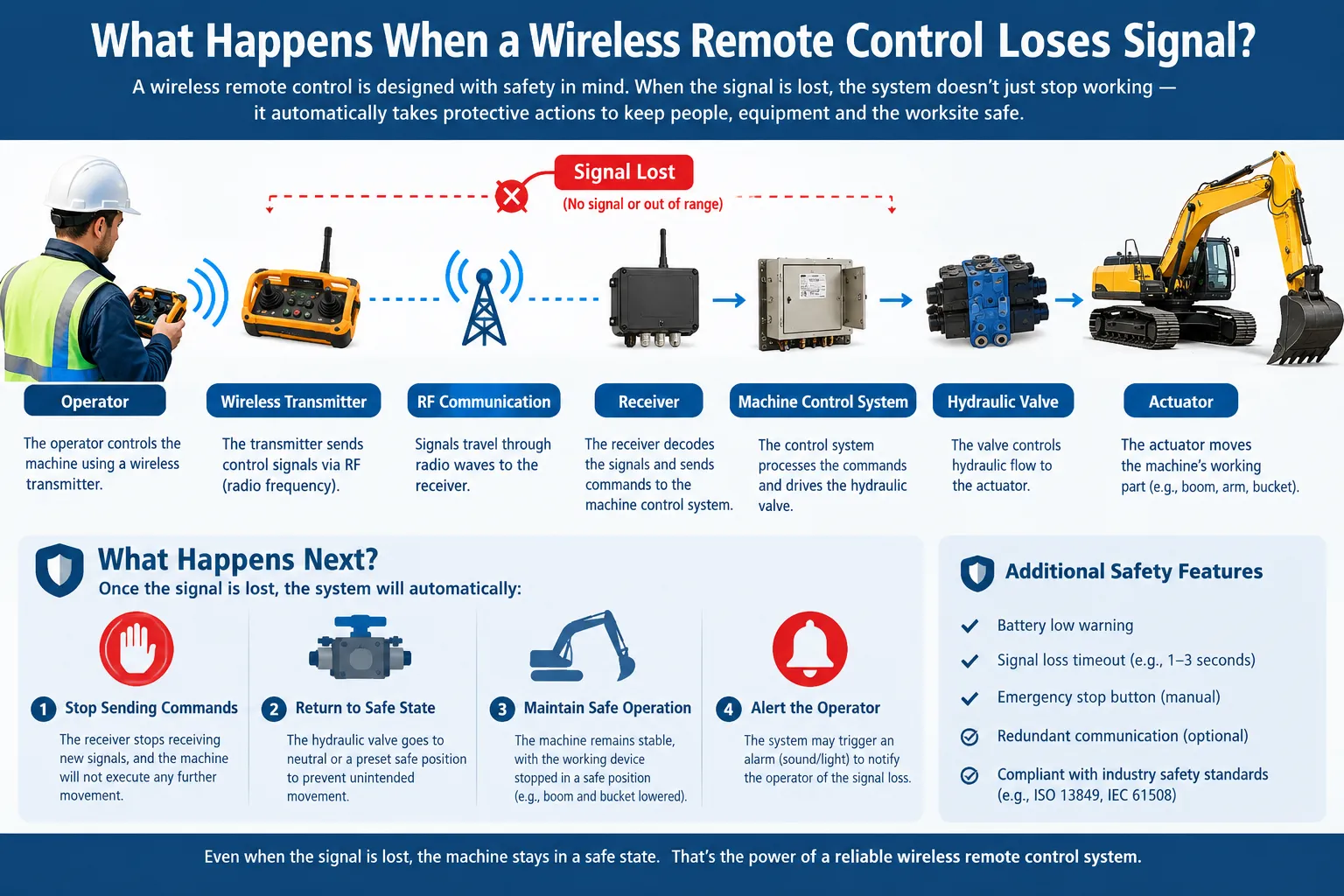
1. The receiver stops receiving valid commands
The interruption may result from excessive distance, an obstruction, radio-frequency interference, transmitter battery depletion, or a failure in the radio communication path.
In a system with monitored communication, the receiver checks for valid messages or another defined indication that the transmitter remains active. Missing or invalid communication can cause the receiver to declare a link fault after its configured detection interval.
The details matter. A system may check for valid data packets, monitor a dedicated safety signal, or use another manufacturer-specific mechanism. The exact method and timeout should come from the technical documentation for the selected model.
2. The receiver changes its output state
Once the receiver detects the fault, its configured logic determines what happens next.
Possible responses include deactivating momentary motion outputs, inhibiting further movement commands, opening a safety-related relay, or entering a defined timeout or safe mode. The response can differ between output channels, particularly where a system supports auxiliary or latched functions.
For example, the PulseStar MRT remote crane control manual describes a product-specific waiting period that is factory set to 450 milliseconds and can be extended to two seconds. That particular system can then enter a ten-minute timeout mode or safe mode, depending on its configuration. These are historical, model-specific settings, not recommended values for all industrial remote controls.
The practical lesson is that a buyer should never assume that every receiver immediately de-energizes every output when radio communication disappears.
3. The machine control system reacts to the output change
The receiver does not usually operate the hydraulic actuator by magic. It communicates with an electrical control circuit, controller, relay system, valve interface, or other machine-specific hardware.
Depending on the integration, the resulting stop behavior may be controlled or immediate. The hydraulic valve may return to its configured neutral state, a motion command may be disabled, or another machine-level stopping sequence may be initiated.
The final result depends on the entire control chain. A correctly configured radio link cannot compensate for an unsuitable valve arrangement, incorrect wiring, or an inadequate machine safety design.
4. The system may require a deliberate restart procedure
After communication returns, the receiver may require the operator to reset a fault, press an enable or start button, release and recenter the controls, or follow another prescribed recovery procedure.
This is an important distinction: restoring the radio connection should not automatically be treated as permission to resume hazardous movement. The machine’s control logic must account for its risk assessment, operating mode, and applicable safety requirements.
Does the Machine Stop Immediately When the Signal Disappears?
Not necessarily. The answer depends on the equipment, the control system’s design, and the specified response to a communication fault.
| Equipment or system condition | Possible response | What must be verified |
|---|---|---|
| Industrial lifting or crane control | Motion commands may be blocked and a configured stopping sequence initiated | Hoist braking, load behavior, stop circuit, and loss-of-link output states |
| Excavator or loader with hydraulic proportional control | The receiver may disable motion outputs and request a stop through the machine control circuit | Valve response, gravity-driven movement, residual pressure, and other stored energy |
| Winch or hydraulic lifting attachment | A motion command may be removed while the mechanical load remains subject to gravity and stored energy | Brake behavior, holding capability, and the machine’s response to loss of control power |
| Industrial equipment with latched auxiliary outputs | Some outputs may remain active if the design permits latching and does not reset them on link loss | Output-by-output fail-safe behavior, including auxiliary functions |
| System with receiver power failure | Outputs may change according to relay architecture and circuit design | Power-loss behavior, output default states, and machine-level safety interlocks |
These are possible behaviors, not guarantees for every machine in the category.
For crane applications, the Unified Facilities Guide Specifications for Gantry Cranes includes a requirement for a fail-safe radio remote control arrangement in which component failure or signal loss causes all crane motors to stop. This is an application-specific specification requirement, not proof that every commercially available remote control has the same behavior.
For hydraulic equipment, an operator should also distinguish between stopping commanded movement and eliminating every hazard. A deactivated electrical output does not itself prove that a raised attachment, suspended load, or pressure-loaded actuator is safe.
Read more: Excavator wireless remote control safety e-stop signal loss protection
Why Do Industrial Wireless Remote Controls Lose Signal?
Intermittent communication is not always a defective transmitter. The first task is to identify the conditions under which the fault occurs.
| Possible cause | Typical symptom | Initial check |
|---|---|---|
| Operating beyond the usable radio range | Commands become unreliable as distance increases | Move to the approved operating area and compare the conditions with the manufacturer’s specified range |
| Metal structures or other obstructions | Communication fails in particular positions or work zones | Check whether steel structures, machine housings, or other obstacles affect the radio path |
| Radio-frequency interference | Intermittent problems occur near other equipment or during certain operations | Record the location and operating conditions, then obtain authorized RF diagnostics |
| Weak or depleted transmitter batteries | Low-battery warning, reduced operating reliability, or shutdown | Check the battery condition and replace or charge it according to the model instructions |
| Damaged antenna or RF connection | Unusually short range or persistent communication faults | Inspect externally accessible components for damage without opening energized equipment |
| Receiver power or wiring fault | The receiver may be unresponsive even when the transmitter appears normal | Have qualified personnel verify receiver supply voltage, fuses, connectors, and wiring |
| Incorrect transmitter-receiver pairing or configuration | A replacement transmitter cannot establish a valid link | Confirm matching configuration and approved commissioning procedures |
| Moisture, vibration, or environmental damage | Faults appear after exposure to harsh conditions or mechanical shock | Inspect the equipment and connectors according to the manufacturer’s maintenance instructions |
| Machine-side electrical or hydraulic fault | Communication appears normal, but a movement command does not produce the expected action | Investigate the control circuit, interlocks, valve interface, and hydraulic system separately |
Why a Longer Rated Range Does Not Guarantee Reliable Operation
A stated operating distance should not be interpreted as a guarantee under all site conditions. Range depends on the specific product, antenna arrangement, interference environment, obstructions, receiver installation, and other operating conditions.
A clear line of sight in an open area is not equivalent to working beside steel machinery, inside a reinforced structure, or around several large metal obstacles. Radio specifications should therefore be reviewed alongside the intended machine layout and the actual working environment.
Nomi’s published hydraulic industrial radio remote control specifications provide a useful example of why conditions matter. The listed NM-001 specifications include a response time of no more than 20 milliseconds and a remote control distance of 225 metres in a straight line in an open area. These figures apply to the stated product information. Neither figure establishes the loss-of-signal timeout or guarantees the same range at every installation site.
How to Troubleshoot Signal Loss Without Creating Another Hazard
Troubleshooting should start with observation, not repeated control inputs or attempts to bypass the receiver’s protection.
If communication is lost during active work, follow the machine-specific emergency procedure, keep personnel clear of dangerous movements, and use an independent stop or isolation method when required and safe to do so. Do not assume that pressing a transmitter-mounted emergency-stop button will reach the receiver if the radio link is already unavailable.
Step 1: Secure the working area
Stop work in accordance with the equipment’s operating procedure. Assess suspended loads, raised components, moving machinery, and other hazards before approaching the equipment.
Do not deliberately reproduce signal loss while the machine is operating in a hazardous condition. Do not ask someone to enter the movement area to observe the receiver or actuator.
Step 2: Read the transmitter and receiver indicators
Check the available status display, indicator LEDs, low-battery warning, and fault messages.
The meanings of these indicators are model-specific. A flashing LED may indicate valid communication, pairing status, low battery, or a fault, depending on the manufacturer. Use the correct manual rather than interpreting an indicator based on another product.
Step 3: Determine whether the problem follows a particular location
If the system operates normally in one approved position but consistently fails in another, record the locations, machine orientation, nearby structures, and operating conditions.
This can help distinguish range or interference problems from a persistent equipment fault. Do not change frequency channels, address codes, or antenna arrangements without authorization.
Step 4: Check the transmitter battery and visible components
Confirm battery condition and externally accessible connections. Look for damaged housings, loose external antenna connections, or signs of moisture.
If battery replacement or another basic maintenance step is permitted by the operating instructions, follow that procedure. Do not open an energized receiver or handle internal wiring as an improvised troubleshooting measure.
Step 5: Determine whether the receiver is communicating but the machine is not moving
A valid radio link does not prove that the machine’s output circuit, control interlocks, hydraulic valve, or actuator is functioning correctly.
If the receiver indicates valid communication but a commanded movement does not occur, stop treating the problem as purely an RF issue. A qualified technician should inspect the relevant control circuit and machine interface using the proper schematic and safe maintenance procedure.
Step 6: Escalate persistent faults
If signal loss recurs, the receiver does not return to its expected operating state, or the machine behaves differently from its documented stopping sequence, take the system out of service as required by the equipment procedure.
Provide technical support with the model and serial number, transmitter and receiver status indicators, the circumstances of the fault, relevant wiring or interface information, and any recorded diagnostic codes. This is more useful than reporting only that the remote control has a weak signal.
Safety during maintenance: For U.S. general-industry work covered by the applicable rule, OSHA’s 29 CFR 1910.147, Control of Hazardous Energy, addresses isolation, lockout or tagout, and the control of stored or residual energy during servicing. Simply switching off a machine or removing a remote control’s battery does not necessarily isolate the machine’s hazardous energy. Other jurisdictions and machine categories may have different applicable requirements.
What Is the Difference Between Signal Loss, Emergency Stop, and Power Failure?
These conditions can produce similar symptoms, but they should be analyzed separately during system design and commissioning.
| Condition | What it means | Key engineering question |
|---|---|---|
| Radio signal loss | Valid communication between transmitter and receiver is interrupted | How quickly is the fault detected, and what does the receiver do? |
| Emergency-stop activation | An emergency-stop function is deliberately initiated | Does the designed safety function stop hazardous movement appropriately and prevent unintended restart? |
| Transmitter power failure | The transmitter can no longer operate normally or transmit commands | Does the receiver detect the loss and enter its specified safe state? |
| Receiver power failure | The receiving unit loses its supply or cannot function normally | What do its outputs and the machine control circuit do when receiver power disappears? |
| Machine-side fault | The radio link may be healthy, but the machine cannot perform the commanded operation correctly | Which machine interlock, electrical circuit, hydraulic component, or actuator is preventing movement? |
An emergency-stop button is not a substitute for a properly designed response to loss of radio communication. Conversely, a signal-loss timeout should not automatically be assumed to provide every protective function required by the machine’s risk assessment.
The ISO 13850:2015 standard sets out principles for designing machinery emergency-stop functions. It treats emergency stop as a complementary protective measure, not a replacement for other safeguards.
The IEC 60204-1 machinery electrical-equipment standard addresses the electrical, electronic, and programmable electronic equipment and systems of machines within its scope. For safety-related control-system design, ISO 13849-1:2023 provides a methodology for designing and integrating safety-related parts of control systems. Its application does not remove the need to determine the safety functions and required performance for the particular machine.
These links provide authoritative reference points, but listing or referencing a standard does not establish that a specific remote control or complete machine is certified or compliant.
How Should Buyers Verify Loss-of-Signal Protection Before Purchasing?
For an industrial wireless remote control, signal stability and operating distance are only part of the selection process. A buyer should also be able to determine exactly how the system behaves when communication fails.
Before comparing quotations, ask the supplier for written answers to the following questions.
1. What is the loss-of-signal detection time?
Ask for the specified detection or timeout value, the conditions under which it applies, and the behavior after that interval expires. Do not substitute a general response-time specification for this information.
2. What happens to each receiver output?
Confirm the behavior of momentary motion commands, latched outputs, auxiliary functions, and any safety-related outputs. Ask whether all relevant outputs change state when communication is lost or whether different channels follow different logic.
3. What happens when transmitter or receiver power disappears?
Request the behavior for transmitter shutdown, battery depletion, receiver supply failure, and other relevant fault conditions. Radio-link loss and receiver power loss are different failure modes.
4. Can movement resume automatically when communication returns?
Ask whether the controller requires deliberate reactivation, whether the controls must be returned to neutral, and how the machine prevents unexpected movement during reconnection.
5. How is the remote control integrated with the machine’s safety functions?
Clarify the receiver output interface, the machine-side stopping circuit, any required interlocks, and the allocation of safety functions between the radio controller and the machine control system.
6. How will the configured behavior be verified?
Request the relevant technical manual, wiring diagram, configuration details, and commissioning test procedure. If a safety performance level or other conformity requirement applies to the project, request the documentation supporting that exact requirement.
These questions are particularly important when retrofitting older machinery. A controller may be electrically compatible with a machine while still requiring additional engineering to achieve the intended behavior under communication loss.
A Practical Commissioning Checklist
Before placing the system into normal operation, the responsible commissioning personnel should verify the following under an approved and controlled test procedure:
-
The correct transmitter and receiver are paired and configured.
-
Normal command operation and the relevant machine interlocks work as intended.
-
Signal loss is simulated under controlled conditions, with hazardous movement and personnel exposure appropriately managed.
-
The observed receiver output states match the approved documentation.
-
Any applicable emergency-stop function is tested separately according to its specified procedure.
-
Receiver power loss and other relevant fault conditions are verified where required by the design.
-
Recovery from a lost link does not produce unexpected movement.
-
Results, configuration details, and any corrective action are documented.
The test must follow the equipment manufacturer’s instructions and the machine’s risk controls. Do not improvise a live test by walking out of range while lifting a load or operating machinery near people.
How Nomi’s Product Information Should Be Interpreted
Nomi offers different industrial radio remote control configurations, including hydraulic industrial radio remote controls, joystick industrial radio remote controls, and push-button industrial radio remote controls. These product categories address different operating interfaces and applications.
The appropriate configuration depends on the machine, controlled functions, interface requirements, working environment, and project-specific safety needs. A general product description alone cannot establish the correct output behavior during signal loss.
For engineering or purchasing enquiries, Nomi’s application information and technical support services provide starting points for discussing a specific machine configuration.
When requesting a quotation, include the machinery model, intended functions, required operating environment, transmitter and receiver interface, and the expected behavior on signal loss. Ask for confirmation of the exact configuration rather than assuming that a feature listed for one model automatically applies to another.
Frequently Asked Questions
Will an industrial wireless remote control always stop the machine when it loses signal?
No universal behavior applies to every system. The result depends on how communication loss is detected, how receiver outputs are configured, and how the machine implements the stopping function. The required response should be specified and verified for the exact application.
Does a longer wireless remote control range mean better safety?
Not by itself. Operating range affects where commands can be transmitted reliably, but safety also depends on fault detection, output behavior, machine integration, and restart control. A longer rated distance is not a substitute for documented loss-of-link behavior.
Is response time the same as signal-loss timeout?
No. Response time generally describes how quickly the system responds to a valid command under specified conditions. Loss-of-signal timeout concerns how long the receiver takes to recognize that valid communication is no longer available. These parameters should be requested and evaluated separately.
Can a hydraulic machine continue moving after the radio link is lost?
Potentially, yes. Removing a movement command does not necessarily eliminate gravitational movement, stored hydraulic energy, or other mechanical hazards. The machine’s stopping response must be assessed alongside its valves, brakes, load-holding arrangements, and control system.
Can I restore operation by turning the remote control off and on again?
Do not assume that power cycling is an appropriate recovery procedure. Follow the manufacturer’s instructions, ensure that the machine is in a safe condition, and confirm the required reset or reactivation sequence before returning to operation.
How can I tell whether the fault is caused by interference?
Record when and where the problem occurs, check the available transmitter and receiver indicators, and compare the behavior with the documented troubleshooting procedure. Repeated failures in a specific area may indicate a radio-path or interference problem, but other causes must also be considered.
No such guarantee should be assumed. If the radio path is unavailable, the stop command may not reach the receiver unless the system has an appropriately designed and functioning safety communication mechanism. The machine’s loss-of-signal response must be independently specified and verified.
What information should I request from a supplier before buying a remote control?
Ask for the link-loss detection time, output states after a communication failure, transmitter and receiver power-loss behavior, restart interlocks, wiring diagrams, compatibility information, and the test procedure used to verify the selected configuration.
Which standards should I consider for an industrial wireless remote control?
Depending on the machine, application, and jurisdiction, relevant references may include ISO 12100 for machinery risk assessment and risk reduction, ISO 13849-1 for safety-related control systems, ISO 13850 for emergency-stop design, and IEC 60204-1 for machinery electrical equipment. The relevant requirements must be determined for the actual project, not inferred from a generic product description.
What should I do if the receiver shows a valid signal but the machine does not respond?
Treat this as a potential machine-side or control-interface fault rather than assuming the radio link is defective. Keep the equipment in the prescribed safe state and have qualified personnel check the relevant interlocks, outputs, wiring, and actuator or hydraulic system using the correct technical documentation.
The Most Important Point
When a wireless remote control loses signal, the meaningful question is not simply whether the radio link reconnects. The important issue is whether the complete machine enters its defined safe condition, remains protected against unexpected movement, and requires the correct procedure before operation resumes.
For operators, that means following the machine-specific procedure and never improvising a recovery while a hazard remains. For engineers and buyers, it means verifying the actual loss-of-link behavior of the selected transmitter, receiver, and machine interface before the equipment is commissioned.
That is a more reliable basis for evaluating an industrial wireless remote control than signal range or normal command response time alone.
